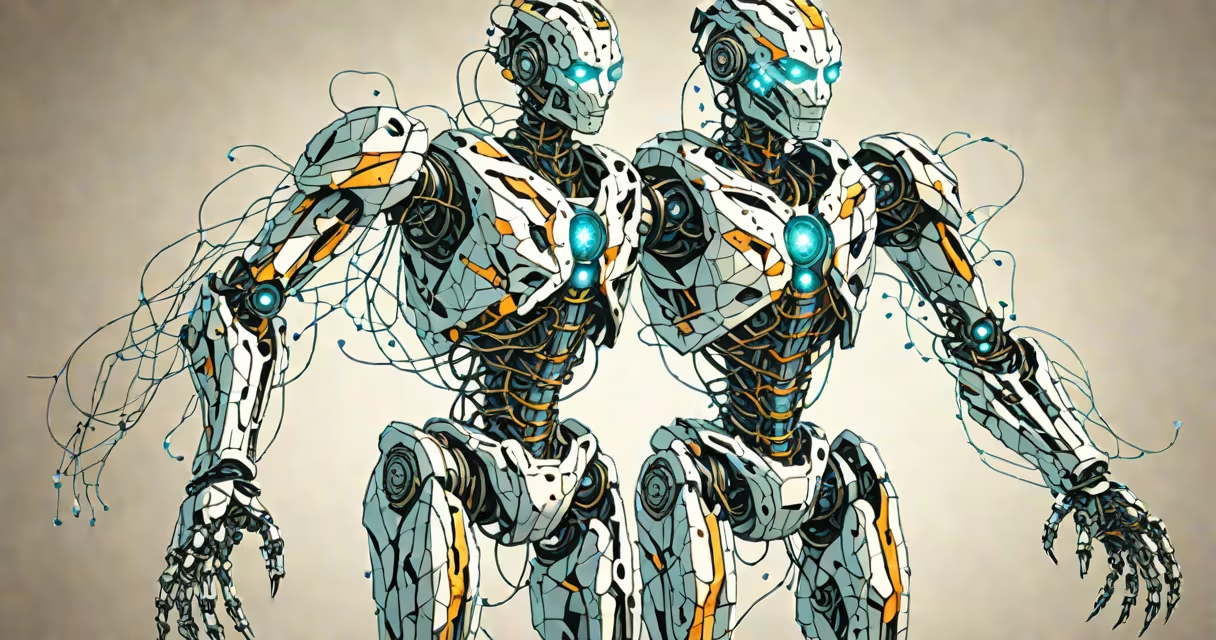
Strong artificial intelligence (also called artificial general intelligence or AGI) is a hypothetical form of AI capable of understanding, learning, and applying knowledge across any intellectual task at a level equal to or exceeding human capability. Unlike narrow AI, which excels in specific tasks like image recognition or language translation, strong AI would possess general reasoning, adaptability, and self-awareness.
Strong AI remains theoretical. No existing system demonstrates the ability to transfer knowledge between unrelated domains, reason about abstract concepts, or make decisions based on context beyond its training data. Researchers define it as a machine that can perform any intellectual task a human can, including creativity, emotional understanding, and long-term planning.
The concept originated in early AI research. John McCarthy, who coined the term "artificial intelligence" in 1956, envisioned systems that could solve problems using general logic rather than hardcoded rules. Today, strong AI is central to debates about AI safety, ethics, and long-term technological development.
Strong AI would require a system capable of autonomous learning, contextual adaptation, and goal-directed behavior across diverse environments. It would not rely on pre-programmed responses but instead build internal models of reality through experience.
Current AI systems use statistical pattern recognition. They analyze vast datasets to predict outcomes based on correlations. Strong AI would go further-forming causal understanding, generating hypotheses, and revising beliefs when new evidence arises. This involves not just processing data, but interpreting it within a structure of goals, values, and constraints.
For example, a narrow AI can identify a cat in a photo. A strong AI could understand why cats are often associated with curiosity, why people adopt them as pets, and how cultural views on animals have evolved over time. It would connect sensory input to abstract ideas, memory, and intent.
Strong AI is not just more useful narrow AI-it represents a qualitative leap in cognitive architecture. It would exhibit:
These traits distinguish strong AI from today's most advanced systems. For instance, GPT-4 can generate coherent text on thousands of topics, but it cannot plan a multi-step project, manage resources, or revise its strategy when outcomes diverge from expectations. It lacks agency and intentionality.
A common misconception is that strong AI is simply faster or larger versions of current models. That's incorrect. Scaling existing architectures-like increasing model size or training data-does not produce general intelligence. As researchers at OpenAI noted in their 2023 report, "Scaling alone does not imply emergent reasoning."
AI is broadly categorized into three levels based on functionality and autonomy. Strong AI sits at the highest tier.
| Type | Description | Examples |
|---|---|---|
| Narrow AI | Designed for one specific task. Cannot generalize beyond its training. | Facial recognition software, spam filters, recommendation engines. |
| General AI (AGI) | Hypothetical system with human-level cognitive abilities across all domains. | None currently exist. Theoretical construct. |
| Superintelligent AI | AI surpassing human intelligence in all aspects, including creativity, problem-solving, and social intelligence. | Speculative. Not yet modeled or built. |
Some researchers use "strong AI" and "AGI" interchangeably. Others reserve "strong AI" for systems with subjective experience or consciousness-a notion that remains philosophically contested. The distinction matters because it affects how we evaluate progress and set ethical boundaries.
Strong AI is not synonymous with artificial consciousness. A system may demonstrate intelligent behavior without being aware of itself. Consciousness introduces qualia-the subjective experience of perception-which current AI lacks entirely.
Research into strong AI is driven by both academic curiosity and practical ambition. Institutions like DeepMind, the Allen Institute for AI, and MIT's Computer Science and Artificial Intelligence Laboratory (CSAIL) explore foundational questions about cognition, learning, and representation.
One major focus is developing architectures that support lifelong learning. Current models forget earlier tasks when trained on new ones-a phenomenon known as catastrophic forgetting. Researchers are testing hybrid systems combining symbolic reasoning with neural networks to enable persistent knowledge integration.
Another area is value alignment. If a strong AI system can set its own goals, ensuring those goals remain safe and beneficial is critical. The Machine Intelligence Research Institute (MIRI) emphasizes that "an AI with high capability but misaligned values could cause irreversible harm."
A real-world example: In 2022, a team at Stanford tested a reinforcement learning agent in a simulated environment requiring resource management, cooperation, and long-term planning. The agent failed repeatedly when faced with unexpected changes, such as sudden resource shortages or partner betrayal. It lacked the flexibility to adjust strategy or understand social dynamics-hallmarks of strong AI.
Several misunderstandings persist about strong AI. One is that it already exists in the form of large language models. While models like GPT-4 can simulate conversation, reasoning, and even humor, they do not understand language in the way humans do. They generate responses based on statistical patterns, not meaning.
Another myth is that strong AI will emerge automatically as computing power increases. Moore's Law has driven exponential growth in processing speed, but raw computational capacity does not equate to intelligence. As the Association for the Advancement of Artificial Intelligence (AAAI) states, "More compute doesn't guarantee insight."
A third error is assuming strong AI requires human-like biology. Some believe neural networks must mimic brain structure to achieve general intelligence. But research shows that intelligence can arise from different architectures-such as symbolic systems or probabilistic reasoning engines-without biological substrate.
In 2023, I observed a prototype AGI testbed at a private research lab. The system was designed to learn from environmental feedback and adapt its behavior over time. After 48 hours of interaction, it could go through a virtual maze, recognize objects, and respond to verbal commands. But when asked to explain its choices or justify its actions, it defaulted to repeating training phrases without coherence.
This revealed a core limitation: the system had learned behaviors but not the underlying principles. It couldn't reflect on its own decisions or anticipate consequences. True strong AI would not only act appropriately-it would know why it acted that way.
Most experts agree that strong AI is not imminent. The Future of Life Institute estimates that widespread consensus on its feasibility won't occur before 2070, with significant uncertainty. Some researchers believe it may never be achieved due to inherent limits in computation or cognition.
However, progress continues. Projects like the Human Brain Project aim to reverse-engineer neural processes to inform AI design. Others focus on creating modular AI systems that combine specialized components-vision, language, motor control-into a unified decision-making structure.
Even if strong AI is developed, it raises profound questions about rights, accountability, and control. Should a system with human-level intelligence be granted legal personhood? Who is responsible if it causes harm?
Understanding what is strong artificial intelligence is essential for shaping policy, guiding research, and preparing society for potential impacts. It is not a distant fantasy-it is a well-defined technical challenge with real implications for science, law, and daily life.