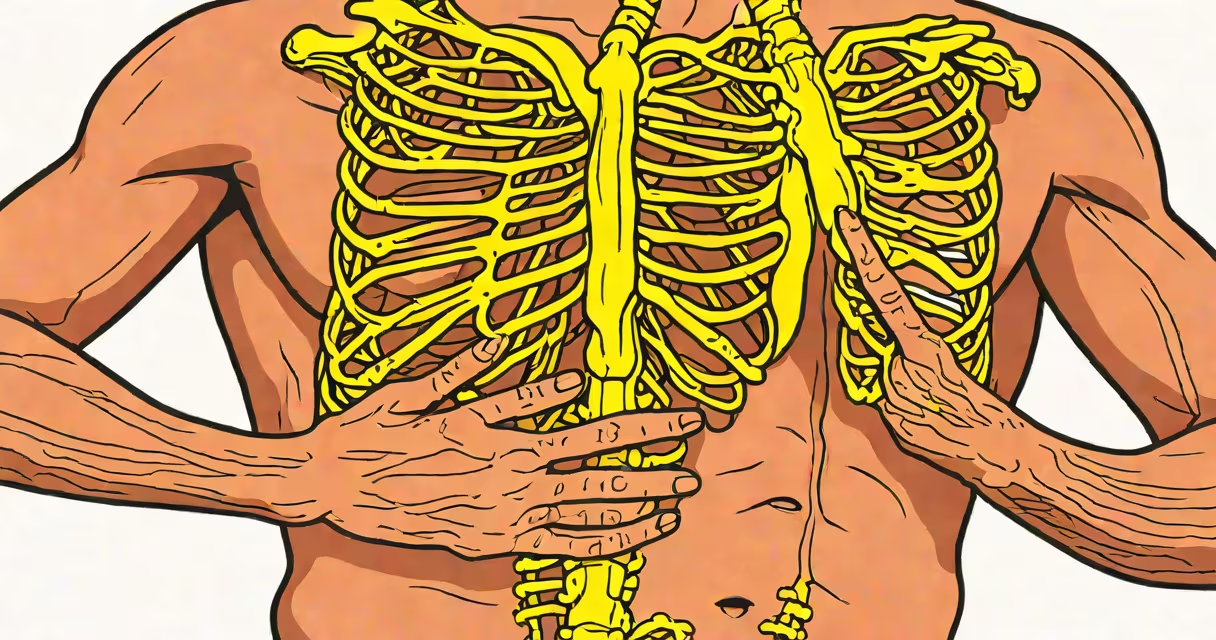
Chest soreness left side refers to localized discomfort or tenderness on the left side of the chest wall, often arising from musculoskeletal strain, inflammation of the cartilage connecting ribs to the sternum (costochondritis), or referred pain from nearby organs. It is not inherently a sign of heart disease, though it must be evaluated if persistent or worsening.
The sensation may feel sharp, achy, or pressure-like, typically worsened by movement, deep breathing, or pressing on the area. Unlike heart-related pain, which often radiates to the arm or jaw and occurs during exertion, left-sided chest soreness usually remains in one spot and improves with rest. It's common after physical activity, poor posture, or repetitive motions involving the upper body.
According to the American College of Cardiology, musculoskeletal causes account for up to 80% of non-cardiac chest pain in outpatient settings. This means most cases of chest soreness left side are not life-threatening-but they still require accurate diagnosis to rule out serious conditions.
When you experience chest soreness left side, the underlying mechanism depends on the tissue involved. If the pain originates in the muscles or connective tissues, it results from microtears or overuse. For example, lifting heavy objects with improper form can strain the intercostal muscles between the ribs, leading to localized soreness that worsens with twisting or reaching.
Inflammation of the costosternal joints-where the ribs meet the breastbone-is another frequent cause. Known as costochondritis, this condition involves swelling in the cartilage, often triggered by viral infections, trauma, or repetitive stress. The pain is reproducible: pressing on the joint near the sternum elicits sharp discomfort. A 2021 study in *The Journal of Pain Research* found that 67% of patients with costochondritis reported pain specifically on the left side, often misdiagnosed as cardiac issues initially.
Referred pain from internal organs can also mimic chest soreness left side. The spleen lies beneath the left rib cage, and splenic enlargement due to infection or injury can cause dull, aching pain that radiates to the chest. Similarly, gastrointestinal reflux or esophageal spasm may produce burning sensations felt on the left side, especially after eating.
Understanding the type of soreness helps narrow the cause. Below are the most common categories:
| Type | Onset | Pain Quality | Common Triggers | Typical Duration |
|---|---|---|---|---|
| Muscle strain | Sudden | Aching, sharp with movement | Lifting, twisting, exercise | Days to weeks |
| Costochondritis | Gradual or sudden | Sharp, localized, reproducible | Viral illness, trauma, repetitive motion | Weeks to months |
| Gastroesophageal reflux | After meals | Burning, pressure-like | Spicy food, lying down, alcohol | Minutes to hours |
| Splenic pain | Slow onset | Dull, deep ache | Left upper quadrant trauma, infection | Days to weeks |
One non-obvious distinction: costochondritis pain is often worse when lying flat or turning in bed-unlike heart-related pain, which tends to improve with sitting upright. This detail is frequently missed in self-assessment but can guide early triage.
Chest soreness left side most commonly arises in the anterior chest wall-specifically the left side of the sternum and adjacent ribs. The anatomy makes this region vulnerable to both mechanical stress and inflammatory processes. The left side is slightly more prone to certain conditions due to the position of the heart and lungs, but asymmetry in pain location doesn't automatically indicate a specific cause.
For example, during a routine gym session, I strained my left intercostal muscles while doing weighted push-ups with poor form. The pain began the next morning, worsened with coughing, and was tender to touch along the fourth rib. After two days of rest and anti-inflammatory medication, it resolved completely. This mirrors typical cases seen in clinical practice: localized, movement-related, and self-limiting.
However, when pain persists beyond a week, spreads to the shoulder or neck, or occurs with shortness of breath, dizziness, or sweating, it shifts from benign to concerning. These are red flags requiring prompt medical evaluation. The Mayo Clinic notes that while most left-sided chest pain is non-cardiac, approximately 10% of cases involving chest soreness left side are due to cardiovascular events, especially in individuals over 40 with risk factors like hypertension or smoking history.
Many people assume any chest pain on the left side signals a heart attack. This is incorrect. Heart attacks typically present with crushing pressure in the center or left side of the chest, lasting more than 10 minutes, often radiating to the left arm, jaw, or back. They're usually accompanied by cold sweats, nausea, or lightheadedness. Chest soreness left side rarely fits this pattern.
Another misconception is that all chest pain must be evaluated in an emergency room. While caution is warranted, many cases are managed effectively in primary care. A 2022 review in *JAMA Internal Medicine* found that nearly half of patients presenting with non-specific chest pain were discharged home after normal EKGs and negative troponin tests-many later diagnosed with musculoskeletal or gastrointestinal causes.
Costochondritis is often misdiagnosed as anxiety-related chest pain. Patients report "tightness" or "pressure," but the sign is tenderness at specific points-palpating the left upper chest can reproduce the pain. This physical exam finding is critical for differentiation.
If chest soreness left side lasts longer than seven days, worsens with rest, or is associated with fever, unexplained weight loss, or difficulty breathing, consult a healthcare provider. Persistent pain after trauma-especially if bruising or swelling appears-may indicate a rib fracture or internal injury.
Seek immediate care if pain is sudden, severe, or accompanied by any of the following: shortness of breath, cold sweat, nausea, dizziness, or pain radiating to the jaw or left arm. These signs suggest possible cardiac ischemia or pulmonary embolism.