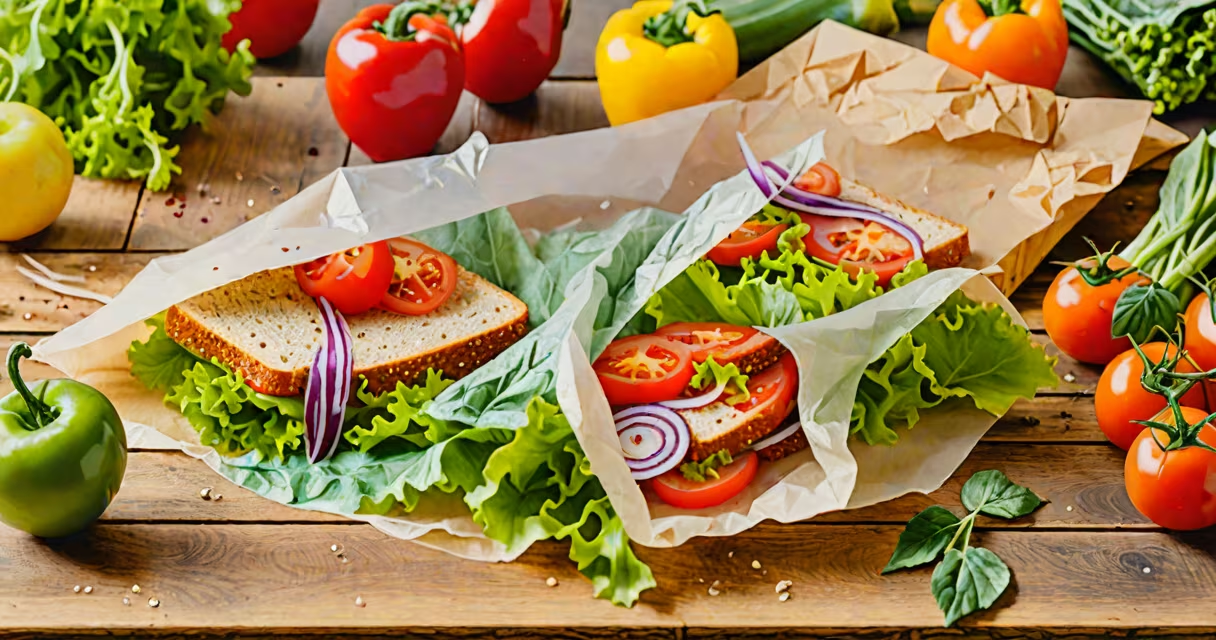
Eco friendly sandwich bags are reusable, washable containers designed to replace disposable plastic sandwich bags. They're made from sustainable materials such as food-grade silicone, organic cotton, or plant-based films that break down naturally. These bags reduce single-use plastic waste and are safe for storing sandwiches, snacks, and other perishables.
Unlike traditional plastic bags, which take hundreds of years to decompose, eco friendly sandwich bags are engineered for reuse-often lasting 500+ uses with proper care. They seal tightly, resist leaks, and maintain freshness. Many models are dishwasher-safe or hand-washable, making them low-maintenance and practical for daily use at home, school, or work.
According to the Environmental Protection Agency (EPA), Americans discard over 100 billion plastic bags annually. Replacing just a fraction of those with reusable options like eco friendly sandwich bags cuts down on landfill burden and microplastic pollution. The shift supports circular economy principles by minimizing resource extraction and waste generation.
Eco friendly sandwich bags function through airtight seals created by zippers, press closures, or elastic bands. The sealing mechanism prevents air and moisture from entering, preserving food quality. Most models feature a double-layer construction: an outer layer for durability and an inner lining for food safety.
Common materials include:
A key distinction often missed: not all "biodegradable" bags are truly compostable. For a bag to qualify as compostable, it must meet ASTM D6400 or EN 13432 standards-meaning it breaks down into water, CO₂, and biomass within 90 days in commercial compost facilities. Home compost bins rarely reach the required temperature and microbial activity.
Different eco friendly sandwich bags suit different needs based on material, size, and intended use. Here's a comparison of common types:
| Type | Material | Reusability | Best For | Disposal |
|---|---|---|---|---|
| Silicone Zipper Bags | Food-grade silicone | 500+ uses | Hot meals, frozen foods, liquids | Recycle via specialized programs or landfill (non-biodegradable) |
| Cotton-PUL Sandwich Bags | Organic cotton + PUL | 300+ uses | Dry snacks, sandwiches, fruit | Landfill (not compostable) |
| Compostable Film Wraps | PLA or cellulose | Single-use | Short-term storage, events | Industrial compost only |
For example, a 12-inch silicone zipper bag can hold a full sandwich, a side of cut veggies, and a small container of hummus-all sealed tightly. I've used one for six months to pack lunches for my daughter's school trips. It survived 150+ wash cycles and still holds its shape. The only wear was minor scuffing on the zipper, which didn't affect performance.
These bags are widely adopted in households aiming to reduce plastic consumption. Schools and workplaces increasingly provide them as part of sustainability initiatives. Some companies offer branded versions to employees as eco-conscious swag.
They're especially useful in settings where food safety and portability matter. A study by the University of California, Davis, found that reusable silicone bags maintained lower bacterial growth compared to single-use plastic bags during 7-day storage at room temperature-likely due to better cleaning practices and material resistance to microbial penetration.
Another overlooked benefit: many eco friendly sandwich bags are designed with food contact safety certifications. Look for FDA-compliant, BPA-free, and phthalate-free labels. The European Union's REACH regulation also restricts certain chemicals in consumer goods, including food-contact materials.
Many consumers assume all reusable bags are equally sustainable. That's incorrect. A bag labeled "eco-friendly" may still contain PVC or non-recyclable components. Always verify the material composition and disposal path.
Another misconception: compostable film bags are "green" regardless of context. But if your local waste system doesn't accept industrial compost, these bags end up in landfills, where they release methane-a greenhouse gas 25 times more potent than CO₂ over 100 years.
Also, some brands market "biodegradable" as synonymous with "compostable." They're not. Biodegradable means a material breaks down over time, but not necessarily safely or predictably. Compostable requires specific conditions and measurable breakdown rates.
The Smith family replaced 300 plastic sandwich bags per year with four reusable silicone bags. Each bag cost $12 and lasts five years. Total cost: $48 over five years. Plastic bags cost $0.05 each-$15 annually. Over five years, the switch saved $75 in purchase costs and eliminated 1,500 plastic bags from landfills.
They also reduced their household carbon footprint by approximately 1.2 kg CO₂ equivalent per year, according to a Life Cycle Assessment (LCA) model published by the Journal of Industrial Ecology. This accounts for production, transportation, washing, and disposal phases.
When shopping, prioritize bags with clear labeling: "FDA-approved," "BPA-free," "OEKO-TEX certified," or "certified compostable." Avoid products with vague terms like "natural" or "green" without supporting evidence.