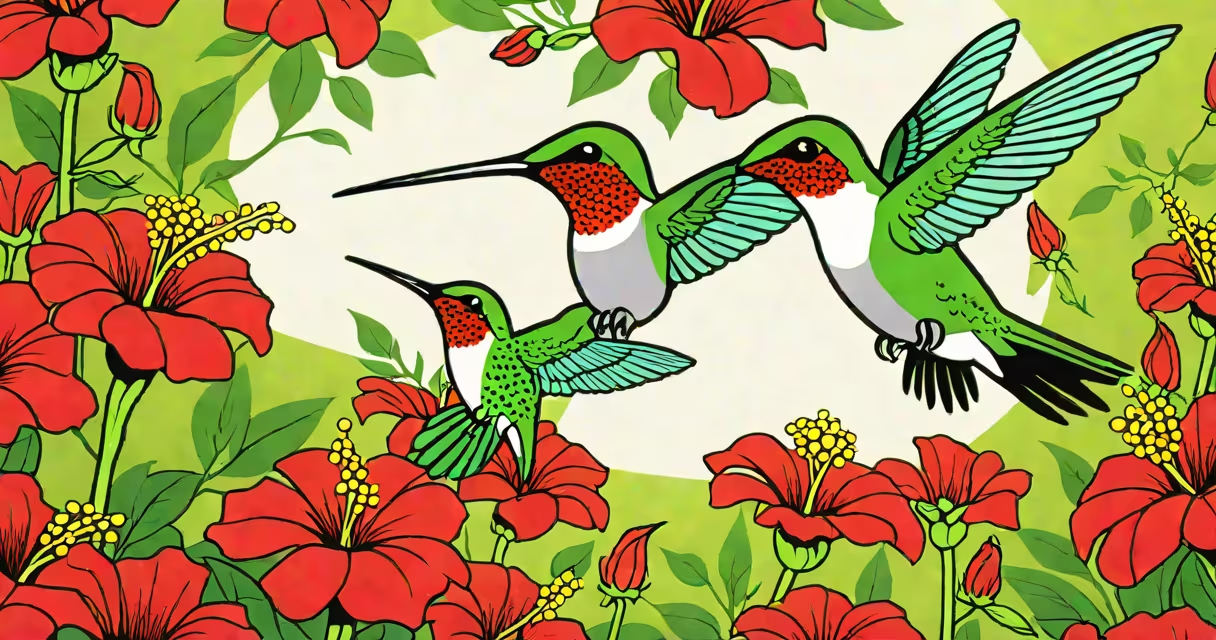
The hummingbird symbolizes joy, resilience, and the ability to find sweetness in life's fleeting moments. Across cultures and belief systems, it represents presence, adaptability, and spiritual renewal. Its rapid wingbeat-up to 80 beats per second-mirrors energy, urgency, and the power of small actions to create lasting change.
Hummingbirds appear in myths, art, and personal visions not as random creatures but as intentional symbols. They are often seen during times of emotional transition, such as recovery from illness, the end of a relationship, or the start of a new chapter. Their appearance may signal that attention to detail, patience, and appreciation of beauty are needed.
According to the National Audubon Society, hummingbirds are among the most agile birds in the world, capable of flying backward and upside down. This physical ability mirrors their symbolic role: going through life's challenges with grace and precision. Their tiny size belies their useful presence in human imagination.
Hummingbird symbolism operates through association, cultural narrative, and personal resonance. When someone sees a hummingbird repeatedly-especially during emotionally charged events-it becomes a signpost. The bird's behavior reinforces its meaning: darting quickly between flowers, sipping nectar, and remaining still mid-air.
These movements reflect themes of mindfulness and gratitude. The bird doesn't waste energy; it focuses on immediate nourishment. In spiritual contexts, this translates to living in the present moment, appreciating small joys, and trusting that sustenance will come when needed.
A 2019 study published in *Frontiers in Psychology* found that people who reported seeing animals during periods of stress often interpreted them as metaphors for inner states. Hummingbirds were frequently linked to feelings of hope and lightness, especially when individuals described them as "flying toward sunlight" or "hovering near a window."
Hummingbird symbolism varies widely by region and belief system. In Mesoamerican cultures, particularly among the Aztec and Maya, the hummingbird was associated with warriors who died in battle. These souls were believed to return as hummingbirds, carrying messages between worlds.
In Native American traditions, especially among the Hopi and Pueblo peoples, the hummingbird is a messenger of love and healing. It appears in stories as a being that brings rain, restores balance, and guides lost travelers. The Navajo consider it a sign of good fortune and protection during travel.
Modern Western interpretations often emphasize personal transformation. Psychologists like Carl Jung noted that recurring animal images in dreams-such as a hummingbird-can represent the anima or animus, the unconscious feminine or masculine aspect of the psyche. A hummingbird in a dream may suggest a need to reconnect with playfulness, curiosity, or emotional sensitivity.
| Culture/Tradition | Primary Symbolic Role | Key Associated Values |
|---|---|---|
| Aztec/Maya | Messenger of fallen warriors | Rebirth, spiritual duty, connection to ancestors |
| Hopi & Pueblo | Healer and bringer of rain | Love, restoration, balance |
| Navajo | Guardian of safe passage | Protection, guidance, positive omens |
| Western Dream Interpretation | Emotional rebalancing | Hope, joy, emotional agility |
Many assume that seeing a hummingbird always means good luck. That's not accurate. While the bird is generally positive, its appearance during grief or anxiety can indicate unresolved emotions. For example, a person grieving a loss might see a hummingbird near a window-its persistent presence could reflect a subconscious desire to reconnect with joy, not a guarantee of immediate relief.
Another myth is that hummingbirds only feed on nectar. In reality, they consume insects and spiders for protein. This dual diet reflects their symbolic duality: sweetness and survival, pleasure and necessity. The bird embodies both the lightness of joy and the grit required to sustain it.
Some online sources claim hummingbirds represent "eternal love" because of their mating dances. However, this is a misreading. Hummingbirds are solitary and aggressive during breeding season. Their courtship involves high-speed dives and vocalizations, not affectionate pair bonding. The idea of eternal love likely stems from romanticized imagery rather than biological observation.
I once witnessed a hummingbird appear at my bedroom window during a period of burnout. I had been working 60-hour weeks, skipping meals, and sleeping poorly. One morning, while staring blankly at a screen, I saw a tiny green-and-gold bird hovering just outside the glass.
It stayed for nearly five minutes, darting toward the feeder I'd forgotten to refill. I stepped back, stunned. Over the next three days, I saw it twice more-once at dawn, once at dusk. I began journaling about what it meant. Eventually, I realized the bird wasn't urging me to work harder. It was asking me to pause, to notice color, sound, and movement in a world I'd stopped seeing.
I took a week off. I planted native flowers. I started meditating. The bird didn't return-but the shift did. My energy improved. My focus sharpened. The hummingbird became a totem for reconnection, not escape.
Hummingbirds are sometimes mistaken for bees or dragonflies due to their size and flight patterns. But their wings move in figure-eight motions, unlike bees' up-down strokes. Dragonflies hover too, but their bodies are elongated and segmented-hummingbirds have compact, feathered forms.
Also, while butterflies are often seen as symbols of transformation, hummingbirds represent a different kind of change: swift, focused, and grounded in the present. Butterflies undergo metamorphosis; hummingbirds embody continuous adaptation.
Another confusion arises in dream analysis. People often interpret a hummingbird as a sign of speed or busyness. But the bird's actual motion is deliberate, not frantic. It moves with intention. In dreams, this suggests that the dreamer is not overwhelmed-they are choosing to act with purpose.
What does hummingbird represent? It is not a single message, but a constellation of meanings shaped by context, culture, and personal experience. It stands for resilience in small packages, joy in transient moments, and the courage to stay present.
When a hummingbird appears-whether in nature, a dream, or a vision-it invites attention. It asks: Are you savoring the moment? Are you moving with intention? Are you open to change?