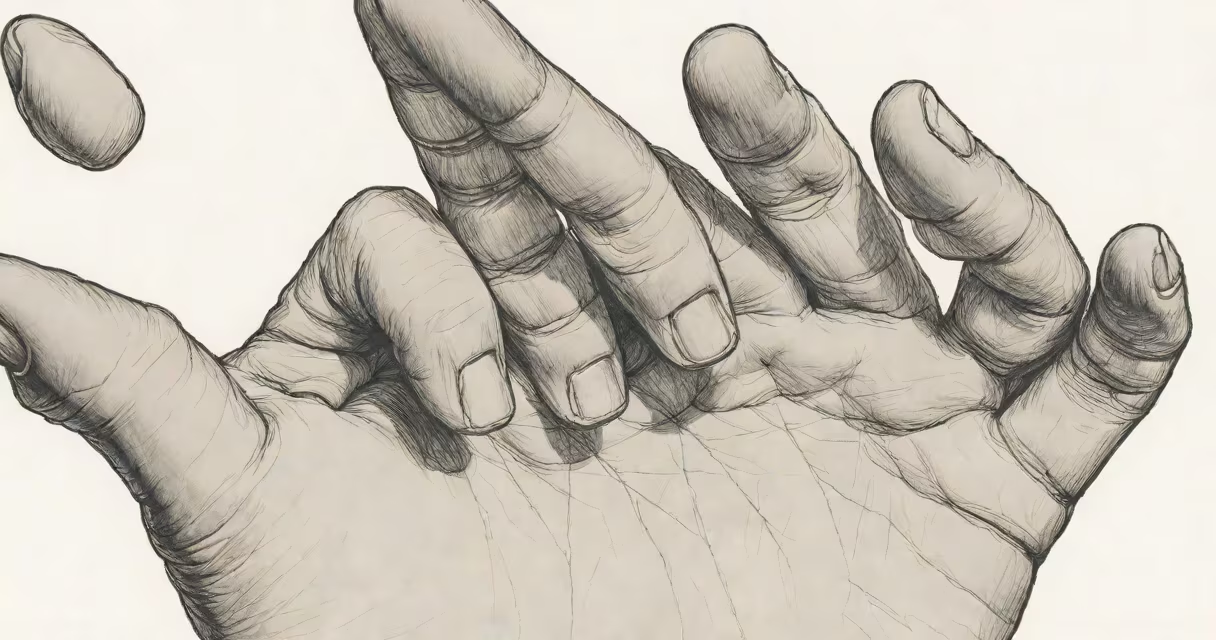
The ASL sign for "more" uses a single extended index finger moved forward in a small arc, typically from near the chest toward the front. It indicates an additional amount or quantity beyond what has already been given or mentioned. This sign is used in both literal and figurative contexts.
ASL, or American Sign Language, is a complete visual language with its own grammar and syntax. Unlike spoken languages, it relies on facial expressions, body movement, and spatial relationships. The sign for "more" follows these principles: the handshape is the index finger extended, the motion is a forward push with slight upward tilt, and the location is usually near the torso or in front of the body.
According to the National Association of the Deaf (NAD), ASL signs are not direct translations of English words. Instead, they convey meaning through form and context. The sign for "more" is not simply a gesture-it's a grammatically structured element in conversation that can modify requests, responses, or descriptions.
To perform the ASL sign for "more," start with the dominant hand. Extend the index finger while keeping the other fingers closed. Position the hand near the lower chest or abdomen, palm facing inward. Then move the hand forward and slightly upward in a small arc, ending with the palm still facing inward. The motion should be quick and deliberate, not slow or exaggerated.
Facial expression plays a critical role. A raised eyebrow and a questioning look signal that the speaker is asking for more. A neutral or firm expression may indicate demand or insistence. The Deaf community emphasizes that non-manual markers-like eye gaze, head tilt, and mouth movements-are as essential as hand movements in conveying precise meaning.
For example, if someone says "I want coffee," and then signs "MORE," they're requesting additional coffee. If a child finishes their meal and says "I'm full," but the parent responds with "MORE?" using a tilted head and widened eyes, the sign communicates surprise or disbelief-"Are you really done?"
A frequent mistake is using the flat hand or the whole hand instead of just the index finger. Using the flat hand resembles the sign for "give" or "take," which changes the meaning entirely. Another error is reversing the direction-the sign should move forward, not backward toward the body.
Some learners assume that signing "more" requires repeating the motion multiple times. In reality, one clear motion suffices. Repeating it can imply impatience or urgency, which alters the tone. Overuse of repetition may also be interpreted as aggressive or demanding in formal settings.
People often confuse the sign for "more" with the sign for "many." While both relate to quantity, "many" uses a sweeping motion with the flat hand, palm down, moving outward from the chest. The sign for "more" is more focused and precise-only the index finger moves.
The sign for "more" appears in everyday interactions. In a restaurant, a diner might sign "MORE WATER" after finishing their glass. In classrooms, students use it to ask teachers for extra materials. In social settings, it signals desire: "Can I have more candy?"
It also functions in abstract contexts. For example, during a discussion about climate change, a Deaf speaker might sign "MORE ACTION" to emphasize the need for stronger policy responses. The sign adapts to metaphorical use, much like English.
According to Gallaudet University's research on ASL syntax, the sign for "more" often appears in questions or commands. It can follow a noun ("more cookies"), precede a verb ("more eat"), or stand alone in response to a request. Its placement affects meaning-placing it before a noun makes it more emphatic.
| Sign | Handshape | Motion | Meaning | Context Example |
|---|---|---|---|---|
| More | Index finger extended | Forward arc, palm inward | Additional amount | "I want more juice." |
| Many | Flat hand, fingers together | Sweeping outward from chest | Large quantity | "There are many people here." |
| Give | Flat hand, fingers together | Forward motion toward recipient | Transfer ownership | "She gave me the book." |
| Take | Flat hand, fingers together | Backward motion toward self | Remove from others | "He took my pen." |
Understanding subtle differences between signs prevents miscommunication. For instance, signing "many" instead of "more" when asking for food could lead to confusion-"many" implies a large group, not an extra portion.
I once watched a Deaf student in a university lecture use the sign for "more" during a Q&A session. He signed "MORE DATA" after the professor presented a graph. His hand moved smoothly forward, and his eyes stayed locked on the professor. The room paused-then nodded. That moment showed how concise and useful the sign can be when used correctly.
Another non-obvious fact: the sign for "more" can be modified with a double motion to mean "even more." This variation is common in storytelling or emotional expression. It's not standard in basic ASL courses but appears frequently in natural conversation among fluent users.
Learning the sign for "more" is part of understanding quantifiers in ASL. Other related signs include "less," "some," and "all." These signs are often taught together because they function similarly in sentence structure.
The sign for "more" is not just a gesture-it's a tool for negotiation, clarification, and connection. Mastering it improves fluency and respect in Deaf communities.