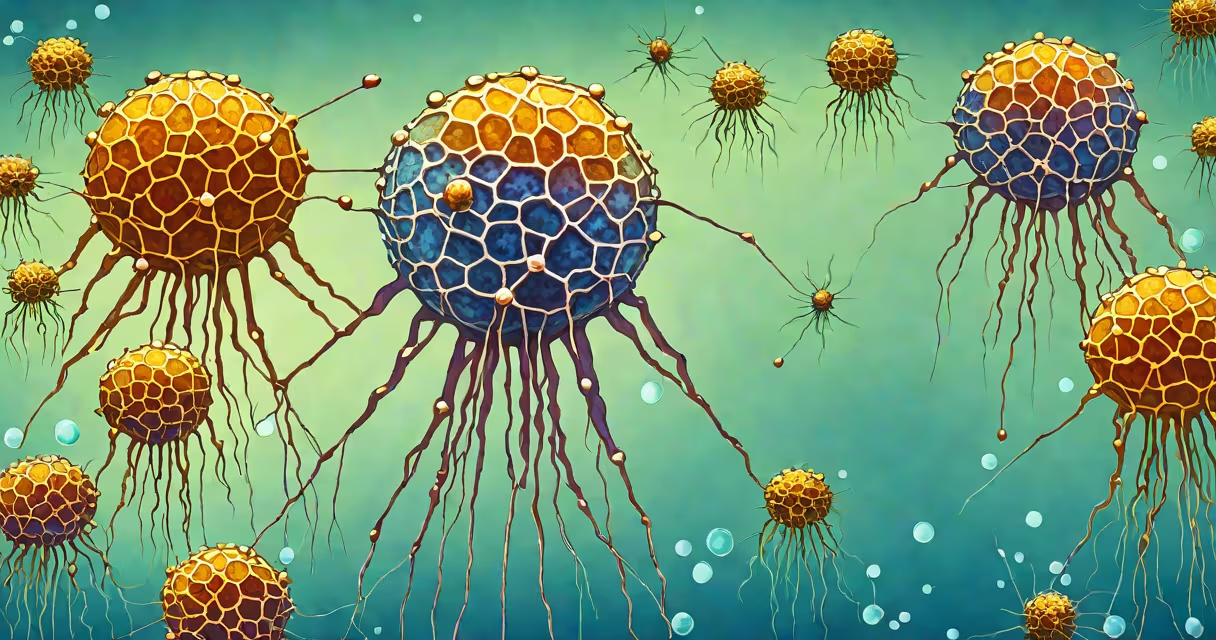
Bacteriophages are viruses that specifically infect and replicate within bacteria. They consist of a protein capsid enclosing genetic material-either DNA or RNA-and use bacterial cellular machinery to produce new viral particles. Their existence was first demonstrated in 1915 by Frederick Twort and independently confirmed in 1917 by Félix d'Hérelle.
Bacteriophages are among the most abundant biological entities on Earth, with an estimated 1031 individuals in global ecosystems. They play a critical role in regulating bacterial populations in oceans, soil, and the human microbiome. Their specificity to bacterial hosts makes them valuable tools in both research and emerging therapeutic strategies.
Each phage targets a narrow range of bacterial species or strains, determined by receptor binding proteins on the viral tail. This precision limits collateral damage to host cells compared to broad-spectrum antibiotics. Phages were historically used in Eastern Europe for treating antibiotic-resistant infections, though Western medicine largely abandoned them after the rise of antibiotics.
Bacteriophages follow a lytic or lysogenic lifecycle. In the lytic cycle, the phage injects its genome into a bacterial cell, hijacks the host's replication machinery, and produces hundreds of new virions before bursting the cell open (lysis) to release progeny. This process kills the host cell.
In the lysogenic cycle, the phage integrates its DNA into the bacterial chromosome and remains dormant for generations. The integrated viral DNA, called a prophage, replicates passively with the host genome until triggered by stress (e.g., UV light, chemicals), leading to excision and entry into the lytic phase.
A well-documented example is lambda phage (λ), which infects *Escherichia coli*. Its genome contains genes that control lysis vs. lysogeny decisions based on environmental signals. When conditions are favorable, λ enters the lytic pathway; under stress, it switches to lysogeny, allowing long-term persistence.
Phages are classified primarily by morphology. The most common form is the tailed phage (order Caudovirales), which includes the double-stranded DNA phages with a head-tail structure. The head holds the genome; the tail contains fibers and a base plate for attachment to bacterial receptors.
| Type | Genome Type | Host Range | Example |
|---|---|---|---|
| Tailed (Caudovirales) | dsDNA | Narrow | λ phage (*E. coli*) |
| Podoviridae | dsDNA | Specific | P1 phage |
| Siphoviridae | dsDNA | Variable | ΦX174 (notable for being ssDNA) |
| Levivirus | ssRNA | Very narrow | MS2 phage |
While most phages have dsDNA, some-like ΦX174 and MS2-are single-stranded RNA viruses. These are exceptions to the rule that phages are DNA-based and show diversity in phage evolution.
Phage taxonomy is maintained by the International Committee on Taxonomy of Viruses (ICTV). As of 2023, over 6,000 phage genomes are cataloged, with many more awaiting characterization due to high sequence divergence.
Bacteriophage therapy is gaining renewed interest as antibiotic resistance spreads. In 2016, a patient in the U.S. survived a multidrug-resistant *Acinetobacter baumannii* infection using a personalized phage cocktail, marking one of the first documented successful clinical uses in the West.
Despite media portrayals, phages do not infect human cells. Their receptors are specific to bacterial surface molecules such as lipopolysaccharides or flagellin. Human cells lack these structures, making phage exposure safe for people.
A common misconception is that phages are "natural antibiotics." While they kill bacteria, they operate through entirely different mechanisms. Antibiotics inhibit metabolic pathways; phages replicate within cells and cause lysis. This distinction affects treatment design, dosing, and resistance development.
In my lab work during graduate school, I isolated a novel phage from a wastewater sample that targeted *Pseudomonas aeruginosa*, a pathogen associated with hospital-acquired pneumonia. After sequencing its genome, we found it belonged to the *Siphoviridae* family and had a unique tail fiber gene not seen in public databases. We tested it in vitro against 12 clinical isolates and observed complete lysis in 11. This experiment underscored how phages remain underexplored despite their ecological abundance.
Research published in *Nature Microbiology* (2022) reported that phage communities in the human gut correlate with immune system regulation. Individuals with inflammatory bowel disease showed altered phage diversity, suggesting a role in maintaining microbial balance.
In scientific literature, bacteriophages are often represented using standardized symbols. The Greek letter φ (phi) denotes phage in notation-e.g., φX174. This symbol appears in textbooks, research papers, and genomic databases.
The use of φ in biology reflects a broader convention: Greek letters represent biological entities, especially in genetics and virology. For example, α and β subunits in proteins, μ for mutation rate, and δ for change. Understanding these symbols aids accurate reading of complex biological texts.
Bacteriophage remains a central concept in modern virology and synthetic biology. Their ability to evolve rapidly and adapt to resistant strains offers a changing alternative to static drug regimens. With increasing evidence of their ecological and therapeutic value, phages are no longer just curiosities-they are tools shaping the future of infection control.